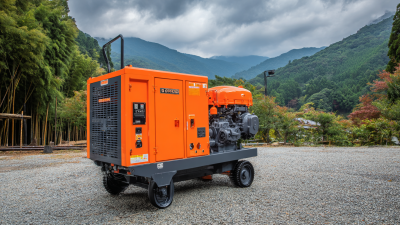
In today’s super competitive business world, making sure you have a reliable power source is more important than ever. After all, nothing kills productivity faster than a power outage. That’s why investing in Commercial Diesel Generators can be a total game changer. These tough machines are like a safety net, keeping things running smoothly whether you’re in manufacturing, hospitality, or any other industry. They provide a backup power supply you can count on when the grid decides to act up.
What’s cool about these generators is that they’re built to last and perform well, which makes them perfect for locations that often experience power cuts or inconsistent energy supply. Plus, they can handle heavy loads without guzzling fuel—and that means savings over time, which is a big bonus for any business looking to cut costs. Modern diesel generators have also gotten a lot quieter and more eco-friendly, so they’re not just reliable—they’re also better for the environment, aligning with the whole sustainability trend.
All things considered, it’s clear that Commercial Diesel Generators are pretty much a must-have for any business wanting to stay resilient, no matter what the future throws at them. They give you peace of mind, help keep operations steady, and boost your overall resilience in today’s tricky marketplace.

Understanding Commercial Diesel Generators and Their Functionality
Commercial diesel generators play a crucial role in ensuring uninterrupted power supply for businesses of various sizes. These generators are specifically designed to provide reliable energy during outages or when the primary power source is inadequate. According to a report by the International Energy Agency, the demand for backup power systems is expected to grow significantly, projected at a CAGR of 6.5% from 2020 to 2026. This trend highlights the increasing reliance on commercial diesel generators as organizations seek to maintain operational efficiency and protect their assets from power disruptions.
The functionality of commercial diesel generators is rooted in their ability to convert diesel fuel into mechanical energy, which is then transformed into electrical power through an alternator. These generators are typically equipped with advanced features such as automatic start systems, load management controls, and remote monitoring capabilities, making them suitable for a wide range of applications, from construction sites to data centers. A report by GlobalData indicates that diesel generators accounted for approximately 67% of the total generator market share in 2022, underscoring their effectiveness in providing robust power solutions in various sectors.
As energy demands continue to rise, understanding the sophisticated functionality of commercial diesel generators will enable businesses to make informed decisions in enhancing their energy resilience.
Key Advantages of Using Diesel Generators for Business Operations
When evaluating power solutions for business operations,
diesel generators stand out due to their reliability and efficiency.
According to a report by the International Energy Agency (IEA),
diesel generators are known for their high power output capabilities and durability, making them ideal for businesses
that require continuous and consistent energy supply. With the ability to handle heavy loads, diesel generators
ensure that operations run smoothly even in the face of unforeseen power outages, which could prove costly in terms of
lost revenue and productivity.
Another significant advantage of diesel generators is their fuel efficiency.
The U.S. Department of Energy has highlighted that diesel generators typically consume
less fuel compared to their gasoline counterparts for the same amount of power output. This efficiency translates not only
into reduced operational costs but also into lower emissions per unit of electricity generated. Furthermore, with advancements
in diesel technology, modern generators have become increasingly eco-friendly,
meeting stringent environmental regulations while still delivering robust performance. This makes them an appealing choice
for businesses looking to balance energy needs with sustainability goals.
Factors to Consider When Choosing a Diesel Generator
When selecting a diesel generator for your commercial needs, several critical factors must be considered to ensure optimal performance and reliability. First and foremost, it's essential to assess your power requirements accurately. Calculating your total load demand, including peak and continuous power needs, helps in choosing the generator with the right capacity. According to a report from the International Energy Agency, businesses can experience up to a 30% increase in operational costs due to power outages, underscoring the importance of selecting an adequately sized generator.
Another vital aspect is fuel efficiency. Diesel generators typically offer better fuel economy compared to gas-powered alternatives, with many models achieving fuel efficiencies of 0.4 to 0.5 gallons per hour per kW. It's crucial to evaluate the generator's fuel consumption rates and consider the prevailing diesel prices in your region. Moreover, maintenance requirements and the generator's lifecycle should influence your decision. Studies show that regular maintenance can extend the lifespan of diesel generators by 50%, making proactive care a cost-effective strategy for businesses aiming for longevity and reliability in their power supply solutions.
Common Applications of Commercial Diesel Generators
Commercial diesel generators are essential for various business sectors that require reliable and efficient power solutions. They are particularly beneficial in applications such as construction sites, healthcare facilities, and data centers. For instance, construction companies often rely on these generators to power tools and equipment in remote locations where access to the electrical grid is limited. Similarly, hospitals and clinics use diesel generators to ensure that critical life-saving equipment operates without interruption during power outages.
Tips: When selecting a commercial diesel generator, assess your business's specific energy needs and consider factors like fuel efficiency and maintenance requirements. Regular maintenance can extend the lifespan of your generator, ensuring it remains a dependable backup for your operations.
In addition to construction and healthcare, commercial diesel generators are widely used in agricultural settings, especially for irrigation systems and storage facilities. They provide a dependable power source in areas vulnerable to power cuts, allowing farmers to maintain operational efficiency. Businesses in the entertainment industry, such as concert promoters or film production companies, also utilize these generators to power equipment and lighting in temporary venues or outdoor events, ensuring a seamless experience for attendees.
Tips: For outdoor events, choose generators that are portable and designed for noise reduction, as this can enhance the experience for both participants and nearby communities. Always ensure proper ventilation and safety measures when operating generators in enclosed spaces.
Maintenance Tips for Ensuring Longevity of Diesel Generators
Proper maintenance of commercial diesel generators is crucial for ensuring longevity and optimal performance. According to a report by the Diesel Technology Forum, regular upkeep can extend the lifespan of diesel generators significantly, with many units lasting over 10,000 hours of operation if properly maintained. Routine maintenance tasks like changing oil and filters, checking coolant levels, and inspecting fuel systems should be performed at regular intervals to prevent catastrophic failures. Additionally, a maintenance schedule that adheres to the manufacturer’s guidelines can help businesses avoid unplanned downtime, which could potentially cost thousands in lost revenue.
Another key aspect of maintaining diesel generators is the importance of load testing. The National Fire Protection Association (NFPA) emphasizes that load testing simulates actual operating conditions, ensuring that the generator can handle the expected load without issue. This process should be performed at least once a year, allowing businesses to identify any potential weaknesses before they lead to serious malfunctions. Furthermore, incorporating monitoring systems that track engine performance and fuel consumption can provide invaluable insights, helping to forecast maintenance needs and avoid costly repairs. By following these maintenance tips, businesses can ensure the reliability and efficiency of their diesel generators, ultimately safeguarding their operations against power interruptions.
Why You Should Consider Commercial Diesel Generators for Your Business Needs - Maintenance Tips for Ensuring Longevity of Diesel Generators
| Feature |
Importance |
Maintenance Tips |
| Fuel Efficiency |
Reduces operational costs |
Regularly check fuel filters |
| Durability |
Longer service life |
Perform routine inspections |
| Power Output |
Sufficient for business needs |
Monitor load levels regularly |
| Noise Level |
Minimize disturbances |
Utilize soundproofing enclosures |
| Ease of Transport |
Flexibility in usage |
Regularly check tire pressure and engine |
Cost Analysis: Diesel Generators vs. Alternative Power Sources
When evaluating power solutions for businesses, a detailed cost analysis reveals
that commercial diesel generators often emerge as a more viable
option compared to alternative energy sources. According to a recent report by the International Energy Agency (IEA),
the operating costs of diesel generators can be significantly lower than those of renewable energy systems in terms of
initial installation and maintenance. While the upfront expense for solar panels may appear attractive, the IEA
indicates that installation costs can exceed $3,000 per kilowatt, and the
intermittent nature of solar power can lead to additional expenses for energy storage solutions.
Moreover, the long-term efficiency of diesel generators further solidifies their economic edge. A study released by the
International Council on Clean Transportation (ICCT) noted
that diesel engines typically provide a reliable energy output, with a fuel efficiency ranging from
34% to 45%, depending on the generator's design and operational conditions.
This efficiency translates into substantial savings in fuel costs, particularly for businesses that require uninterrupted
power during peak operational hours or in remote locations where electricity access is limited or unreliable.
Consequently, many companies are now strategically incorporating diesel generators into their energy strategies
to enhance operational resilience while optimizing budgetary constraints.
Regulatory and Environmental Considerations for Diesel Generators
When considering the implementation of commercial diesel generators for business operations, it is crucial to take into account the regulatory and environmental implications associated with their use. Diesel generators are often preferred for their reliability and efficiency; however, they are subject to stringent environmental regulations aimed at reducing emissions and mitigating air pollution. According to the U.S. Environmental Protection Agency (EPA), diesel generators must comply with the National Emission Standards for Hazardous Air Pollutants (NESHAP), which dictate allowable limits on emissions of harmful substances. Businesses must ensure adherence to these regulations to avoid penalties and contribute to cleaner air quality.
Moreover, the impact of diesel generator emissions on the environment cannot be overlooked. A report from the International Energy Agency (IEA) indicates that diesel generators significantly contribute to greenhouse gas emissions, with carbon dioxide (CO2) emissions estimated to account for nearly 30% of total emissions in the power generation sector. This has prompted many businesses to explore cleaner alternatives or to invest in technologies that can mitigate these emissions, such as hybrid systems that combine renewable energy sources with diesel generators. Implementing such solutions not only aligns with regulatory requirements but also demonstrates corporate responsibility towards sustainability, appealing to environmentally conscious consumers and stakeholders.
Comprehensive Guide to Customized Port-Specific Diesel Generator Sets: Features, Benefits, and Applications
Customized port-specific diesel generator sets play a crucial role in ensuring uninterrupted power supply for port operations. These systems are designed to address the unique challenges faced by port facilities, including variable power demands due to fluctuating shipping schedules and the need for robust and reliable energy sources. According to industry reports, the global demand for diesel generators in the marine sector is anticipated to grow at a CAGR of over 6% from 2023 to 2030, highlighting the importance of tailored solutions to enhance operational efficiency at ports.
One of the key features of these diesel generator sets is their customizability. This allows port operators to specify engines that meet exact performance requirements, ensuring that the power output aligns with the operational needs of various port activities, including loading and unloading cargo, powering cranes, and fueling vessels. Additionally, their design emphasizes efficiency and low emissions, aligning with the increasingly stringent environmental regulations imposed on marine operations. Robust construction and simplified maintenance processes further enhance their appeal, enabling a dependable and economic solution for power generation.
The strategic application of customized diesel generators at ports not only boosts operational reliability but also plays a critical role in disaster recovery planning and energy independence. With a reliable power source, ports can decrease downtimes and optimize cargo handling, ultimately reinforcing their position in the global trade network. The investment in this technology promises considerable returns through improved efficiency and operational uptime, essential for maintaining competitiveness in the dynamically evolving shipping industry.
FAQS
: Commercial diesel generators provide reliable energy during power outages or when the primary power source is inadequate, ensuring an uninterrupted power supply for businesses.
Diesel generators convert diesel fuel into mechanical energy, which is then transformed into electrical power through an alternator.
Modern diesel generators are equipped with advanced features such as automatic start systems, load management controls, and remote monitoring capabilities.
Diesel generators are known for their reliability, high power output, durability, and fuel efficiency, making them suitable for continuous energy supply.
Diesel generators typically consume less fuel compared to gasoline generators for the same amount of power output, leading to reduced operational costs.
Modern diesel generators can be eco-friendly and meet stringent environmental regulations, resulting in lower emissions per unit of electricity generated.
Commercial diesel generators are utilized in various applications, including construction sites and data centers.
The demand for backup power systems, including diesel generators, is projected to grow at a CAGR of 6.5% from 2020 to 2026.
Diesel generators ensure operations run smoothly even during power outages, reducing the risk of lost revenue and productivity.
Businesses should evaluate the reliability, efficiency, and sustainability of power solutions to enhance their energy resilience and meet operational needs.
Conclusion
Commercial Diesel Generators are essential power sources for businesses seeking reliable, efficient, and cost-effective energy solutions. Understanding their functionality provides insight into how these generators can effectively support operations, especially in scenarios where power continuity is critical. The key advantages of utilizing diesel generators include their fuel efficiency, durability, and lower operational costs compared to alternative power sources.
When selecting a Commercial Diesel Generator, several factors must be considered, including power needs, size, and application requirements. Common applications range from industrial operations to emergency backup power. Regular maintenance is crucial for ensuring the longevity of these generators, alongside an understanding of regulatory and environmental considerations that may impact their use. A comprehensive cost analysis can further assist businesses in weighing the benefits of diesel generators against other energy options.