• facebook
  • linkedin
  • twitter
  • instagram
  • TikTok111
  • youtube
  • pinterest
0%

Picking a generator isn’t really about grabbing the biggest one you can find—it’s more about matching what it puts out to what you actually need it to do. An open frame diesel generator? Those can be a solid fit for construction sites, farms, workshops, or backup situations where getting to the machine easily matters. Since the frame is exposed, you can get at things for routine checks and maintenance without a headache. On the flip side, that same openness means dust, rain, and the occasional clumsy bump are more likely to get to it. So take a minute to plan where you’ll put it. And hey, don't forget about noise levels — especially if there are workers nearby or folks living next door.

Alright, so this guide isn't just about the sticker price — it digs into the details that actually matter when you're comparing models. You'll want to look at rated and standby output, fuel consumption, engine specs, what the control panel offers, and the kind of loads you're planning to throw at it. And don't just take the published numbers at face value — check them against the equipment you actually run, especially those motors and pumps that draw a lot on startup. When you talk to sellers, be sure to ask about warranty coverage, local service, replacement parts, and delivery arrangements. Those little things can make or break the deal. Honestly, those answers can be all over the place depending on the supplier and where you're located. So yeah, definitely get it in writing before you move forward.

Look, a shiny spec sheet can only take you so far. It definitely doesn’t tell the whole story. What matters is whether the documentation is actually clear and support is consistent—and if a claim sounds vague, be suspicious. You also have to think about things like operating conditions, how easy it is to get at the generator for maintenance, and how often it’ll be running. That cheap model? It might end up costing you more in the long run if replacement parts are a pain to track down. And no matter how careful you are, a thorough comparison can still leave something out. So the right call really depends on your site, your workload, and the support you can count on—not just where it ranks.

Top Open Frame Diesel Generators for Sale

How Open Frame Diesel Generators Work

An open-frame diesel generator converts fuel into electricity through a compact mechanical chain. Diesel fuel is injected into compressed, hot air inside the cylinder. Combustion pushes the piston down, turning the crankshaft. The shaft spins an alternator, where a rotating magnetic field induces electrical current in the stator windings. That is the cycle. A control system monitors voltage and frequency, adjusting engine speed or fuel delivery as electrical demand changes.

The U.S. Department of Energy’s Catalog of CHP Technologies reports electrical efficiencies of roughly 25% to 50% for reciprocating engines, depending on size and configuration. This is a broad range, not a promise for every portable generator. Load, maintenance, and operating conditions all matter. At light loads, fuel use per unit of electricity can rise. Heat matters. The open frame leaves the engine and alternator exposed, helping airflow and giving technicians direct access to filters, belts, and connections. It also means more noise and less protection from rain and dust.

During operation, the radiator moves heat away from the engine, while the alternator’s cooling fan helps prevent overheating. Exhaust leaves through a muffler, but the hot outlet still needs clear space. Open-frame units are practical where access and ventilation are priorities, yet their exposed construction requires careful placement and regular inspection. A loose connection or clogged air filter is easy to overlook—and can affect output or reliability.

Key Components and Design Features

An open-frame diesel generator exposes its working parts, making component layout as important as rated output. The diesel engine drives an alternator, while a rigid steel base supports both and helps limit movement. Look for accessible oil and coolant service points. A filter hidden behind a brace can make routine maintenance frustrating. The control panel should show operating hours, warning lights, and key readings at a glance. Details matter. A fuel tank integrated into the base saves space, but its usable capacity should match expected runtime and load. Cooling airflow needs room around the radiator; a tight installation can raise temperatures, even when the generator is correctly sized.

Vibration isolators can reduce shaking transferred from the engine to the frame, but they cannot fix an uneven foundation. Open-frame models usually lack a weather canopy, so plan for a dry, ventilated location and safe exhaust routing. Check clearances. Inspect alternator terminals, circuit breakers, and cable entry points for sturdy covers and clear labels. A simple frame is easier to inspect, yet exposed belts, hot surfaces, and noise still deserve attention during placement. Small details are often missed. When comparing generators for sale, compare service access, tank capacity, cooling design, and documented output conditions, not only the nameplate rating.

Top Open Frame Diesel Generators for Sale – Key Components and Design Features

Four-pole alternators typically run at 1,500 rpm for 50 Hz output and 1,800 rpm for 60 Hz output. Engine speed is a key design consideration when selecting an open-frame diesel generator.

Common Applications and Operating Conditions

Open-frame diesel generators suit construction sites, farms, mines, and industrial facilities that need temporary or standby power. Their exposed engine and alternator are easier to inspect, but they offer little protection from rain, dust, or accidental contact. Keep the unit on firm, level ground, with clear airflow around the radiator and exhaust. On a muddy site, even a small shift can complicate servicing.

They also support critical loads in hospitals and data centers, where an outage can interrupt essential systems. Uptime Institute’s 2023 Global Data Center Survey reported that 54% of respondents’ most recent significant outages cost more than $100,000. Separately, the International Energy Agency’s Electricity 2024 report projected data-center electricity consumption could exceed 1,000 TWh in 2026. These figures do not measure generator use directly, but they show why reliable backup planning matters.

Operating conditions shape real output. High ambient temperatures, dusty air, and elevation can reduce available power; check the manufacturer’s derating guidance before sizing a unit. Match capacity to starting loads, not just steady demand, and test the generator under load. Store fuel safely and plan for refueling during extended outages. Noise and exhaust need attention near workers or occupied buildings. A neat specification sheet is not a site assessment; that distinction is easy to miss.

How to Compare Generator Models and Specifications

Top Open Frame Diesel Generators for Sale
How to Compare Generator Models and Specifications

Choosing an open-frame diesel generator starts with the job, not the largest number on its sales sheet. Check whether the rating is prime or standby, then compare rated kilowatts, voltage, phase, and frequency with the equipment you will run. A workshop motor may draw much more power at startup than during steady operation. Leave a sensible capacity margin, but avoid buying far above typical load; prolonged light loading can be hard on diesel engines.

The U.S. Department of Energy’s Alternative Fuels Data Center lists diesel’s energy content at about 128,488 Btu per gallon. That figure describes fuel energy, not a generator’s actual efficiency. Ask for fuel-consumption figures at several loads, such as 25%, 50%, and 75%, and compare models at the same conditions. Review applicable ISO 8528 ratings, alternator details, cooling design, noise data, and altitude or temperature derating. Specifications can still be incomplete. Request a load-test record when available.

Tips: Match the outlet configuration to your cables and equipment. Check the control panel, breaker rating, service access, and stated runtime. Compare fuel use under your real load, not just peak output. A neat specification sheet helps, but field conditions rarely stay neat.

Top Open Frame Diesel Generators for Sale - How to Compare Generator Models and Specifications
Comparison factor 20 kVA class 30 kVA class 50 kVA class 100 kVA class 150 kVA class
Typical prime output at 0.8 power factor 16 kW 24 kW 40 kW 80 kW 120 kW
Typical standby output at 0.8 power factor 18 kW 27 kW 44 kW 88 kW 132 kW
Common frequency and speed 50 Hz at 1,500 rpm; 60 Hz sets commonly run at 1,800 rpm. Confirm frequency and speed before ordering.
Typical three-phase voltage 400/230 V at 50 Hz is common in many markets; 480/277 V at 60 Hz is also common. Available voltage depends on alternator winding and configuration.
Approximate fuel use at 75% load 3–5 L/h 4–7 L/h 7–11 L/h 13–20 L/h 19–29 L/h
Typical engine arrangement 3- or 4-cylinder, water-cooled 3- or 4-cylinder, water-cooled 4-cylinder, water-cooled 4- or 6-cylinder, water-cooled 6-cylinder, water-cooled
Typical starting system 12 V electric starting is common on smaller sets; larger sets may use 24 V. Verify battery, charger, and cold-start requirements.
Best suited to Small workshops, pumps, and backup loads Retail sites and light commercial use Construction sites and medium-sized facilities Larger buildings and substantial motor loads Industrial or large commercial backup and prime power
Key checks when comparing Compare prime rather than standby rating for continuous use; check motor-starting capability, voltage regulation, fuel consumption at your expected load, emissions compliance, service access, and noise restrictions.
These are representative, brand-neutral comparison ranges, not specifications for particular products. Actual ratings, fuel use, dimensions, and configurations vary by engine, alternator, ambient conditions, and applicable standards. Request the manufacturer’s data sheet for the exact model before purchase.

Choosing the Right Power Rating and Fuel Capacity

For top open frame diesel generators for sale, size the unit around real loads, not its largest advertised number. List each appliance, tool, or pump, then note its running watts and starting surge. Motors can briefly demand much more power at startup. A generator that handles steady demand may still trip when a loaded pump kicks on. Leave room for future equipment, but avoid buying far beyond likely use; very light loading can reduce operating efficiency. Check the rating basis, too: standby and prime ratings describe different duty expectations.

Fuel capacity depends on load and runtime, not tank size alone. The U.S. Energy Information Administration’s Monthly Energy Review lists diesel distillate at 137,381 Btu per gallon. That is fuel energy, not electricity delivered; engine efficiency and load change consumption. Ask for the generator’s fuel-use figures at several load levels, then estimate gallons from expected operating hours. A 20-gallon tank may last very different lengths of time at half load and near full load. Check the actual curve. Keep a margin for delays and colder starts, but don’t treat a quoted runtime as guaranteed. One detail is easy to miss: an open frame can make routine inspection convenient, yet site conditions and ventilation still affect where it can operate.

Pricing, Availability, and Seller Considerations

Prices for open-frame diesel generators vary with rated output, engine hours, control equipment, and condition. Ask whether the quote includes a radiator, battery, breaker, and weather protection. Freight, unloading, commissioning, and taxes can change the delivered cost. Get these items listed separately. Ask for proof.

Availability can mean different things: in stock, awaiting inspection, or still in transit. Request a current photo of the unit and its identification plate, plus a realistic dispatch date. For used equipment, ask for maintenance records and a recent load-test report. A cold start is useful, but it does not confirm performance under sustained load. Comparisons can get messy when sellers describe ratings differently, so verify the stated standby or prime rating against your expected duty cycle.

Check the seller’s return terms, warranty duration, and who handles repairs. Confirm that replacement filters and routine service parts are reasonably obtainable in your region. Ask whether the warranty transfers with a resale and what it excludes. Some listings leave these details vague; that is a reason to pause, not necessarily to walk away. A written quote, documented test results, and a clear delivery schedule make the decision more dependable.

Inspection, Safety, and Routine Maintenance

Before buying an open-frame diesel generator, inspect it cold and ask for service records. Look closely. Check the frame for fresh welds, deep rust, loose bolts, and signs of oil or fuel leaks. Examine hoses for cracks and wiring for worn insulation. A clean exterior is reassuring, but it does not prove the engine is healthy. If possible, have a qualified technician assess the unit and run it under a suitable load.

Place the generator outdoors, far from doors, windows, and air intakes; exhaust can contain deadly carbon monoxide. Keep it dry, stable, and clear of combustible materials. Follow the operating manual for grounding and connection procedures. Before maintenance, shut the unit down, let hot parts cool, and isolate the starting system as directed. Diesel spills should be cleaned promptly, not left for later.

Routine care is simple, but easy to postpone. Check engine oil and coolant before use, and inspect the air filter, battery terminals, belts, and fuel lines at scheduled intervals. Replace filters and fluids according to the manufacturer’s service guidance, not guesswork. Keep a dated log of operating hours, repairs, and unusual smoke or vibration. A checklist can miss how a machine was treated between services, so trust the records—and your inspection—more than a fresh coat of paint.

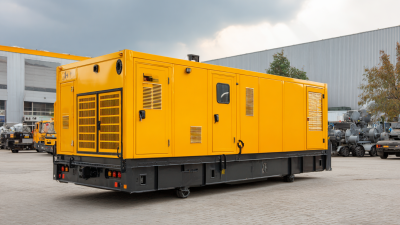
Reliable Power for Demanding Applications: Stable-Performance Volvo Diesel Generators, 202 kW–520 kW

Designed for demanding applications, these diesel generator sets deliver dependable power across a 202 kW–520 kW range. Their stable performance makes them suitable for facilities and operations that need a consistent electricity supply, whether supporting essential equipment or helping maintain productivity during interruptions to the grid. A broad output range also makes it easier to select a configuration that fits different power requirements.

Built on more than 120 years of Swedish engine-manufacturing heritage, the sets emphasize quality, safety, and environmental responsibility. Their engines are designed for efficient fuel use and low emissions, helping reduce operating waste while providing reliable power. They meet EU Stage II and Stage III emission standards, offering a practical balance of performance and environmental consideration for applications where dependable output and responsible operation both matter.

FAQS

How does an open-frame diesel generator produce electricity?

Fuel burns in compressed, hot air inside the cylinder. The piston turns the crankshaft, which spins the alternator and produces electricity. A control system adjusts engine speed or fuel delivery as demand changes.

Why does an open-frame design need extra care?

Its exposed engine and alternator allow airflow and easier access to filters, belts, and connections. But the unit offers less protection from rain and dust, and it is usually noisier. Placement matters.

How efficient are reciprocating-engine generators?

Reported electrical efficiency ranges from roughly 25% to 50%, depending on size and configuration. That range is not a promise for every generator. Light loads, poor maintenance, and operating conditions can affect fuel use.

What costs should a written quote include?

Ask whether the price includes the radiator, battery, breaker, and weather protection. Request separate costs for freight, unloading, commissioning, and taxes. Get these items listed clearly. Ask for proof.

How can I check a generator’s availability and condition?

Request a recent photo, the identification plate, and a realistic dispatch date. For used equipment, ask for service records and a recent load-test report. A cold start alone cannot confirm sustained performance.

What should I inspect before buying a used unit?

Check for deep rust, fresh welds, loose bolts, and oil or fuel leaks. Look for cracked hoses and worn wiring insulation. A clean exterior can still hide problems. A qualified technician can assess the unit under load.

Where should an open-frame generator operate?

Keep it outdoors, away from doors, windows, and air intakes. Exhaust can contain deadly carbon monoxide. Place it on stable, dry ground, clear of combustible materials, and follow the manual’s grounding and connection instructions.

What routine maintenance helps keep a generator reliable?

Check oil and coolant before use. Inspect the air filter, battery terminals, belts, and fuel lines on schedule. Replace fluids and filters according to service guidance, and log hours, repairs, smoke, or vibration. Checklists help, but they cannot reveal everything.

Conclusion

An Open Frame Diesel Generator produces electricity by using a diesel engine to drive an alternator, with its exposed frame allowing airflow and easier access to key parts. Its main components typically include the engine, alternator, fuel system, control panel, cooling system, and protective frame. These generators are often suited to construction sites, farms, workshops, and backup power needs, though operating conditions such as weather, ventilation, noise limits, and expected load should guide selection.

When comparing models, review rated and standby power, fuel consumption, tank capacity, voltage, controls, and maintenance access. Choose a power rating that can handle both normal demand and startup surges, while matching fuel capacity to the desired run time. Before purchasing, compare pricing, stock availability, warranty terms, and seller support. Inspect the unit for damage, verify its specifications, and follow safe operating practices. Routine checks of oil, filters, coolant, fuel lines, and electrical connections can help maintain reliable performance.

Liam

Liam

Liam is a dedicated marketing professional at Jiangsu Longen Power Technology Co., Ltd., a premier generator manufacturer renowned for its expertise in designing, manufacturing, and servicing a wide range of diesel generator sets. With a power output varying from 5KVA to 3300KVA, the company......
Previous What Is the Best Soundless Generator for Home from China?