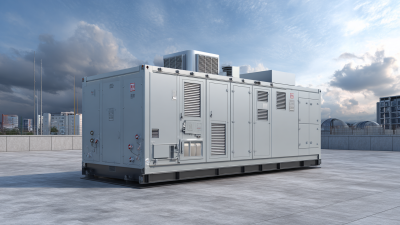
Think about it—industrial power generators are the backbone of so many critical operations. Whether it's pumping water at a remote site, keeping refrigeration running, or powering a production line, they're everywhere. Now, if you're a global buyer, picking the right one isn't just about the wattage you see on the box. There's a lot more to consider. You've got load profile, starting demand, voltage, frequency, fuel access, and how long you expect to run it—all these factors really affect performance. For instance, a generator that handles a steady factory load might not cut it when you've got equipment that starts up in sharp bursts. Those little details can make a big difference.
Alright, so this guide breaks down the top options for 2026, and we're looking at the real-world stuff: how much power they can actually put out, how the controls work, whether you can get to the guts easily for service, noise levels, how much space they take up, and the emissions numbers—documented ones, not just marketing claims. Then there's the bigger picture: things like climate, altitude, any transport constraints, and whether you have the local know-how to maintain them. These can make or break your installation experience. Now, here's the thing—you definitely want to double-check the exact specs with the manufacturer before committing, and also make sure you're up to date on all the regulations in your target market. Datasheets? They're handy, sure, but they're no substitute for an actual site assessment. You want boots on the ground, so to speak.
Honestly, there's no perfect shortlist out there. You might snag a low purchase price, but then you could be waiting forever on parts. Or maybe you get a fancy control panel that's overkill for a small site. That trade-off is worth really digging into. Think of these recommendations as a starting point, not the final word—you still need to get engineering eyes on it. When you talk to suppliers, don't just take their word. Ask for test records, warranty details, fuel consumption at realistic loads, and references from similar installations. Then compare all that against what you actually run on a day-to-day basis. That's where the real insight comes from. Honestly, a generator is so much more than just some machine sitting on a concrete pad. It's a crucial part of the whole power system, and it has to be ready to go when you really can't afford to hit pause on production. You know what I mean?
Industrial power generators supply electricity when grid service is unavailable, unstable, or insufficient for a facility’s peak demand. Their core is the engine and alternator: the engine converts fuel energy into rotation, while the alternator produces electrical power. A governor regulates engine speed; an automatic voltage regulator helps keep output voltage within operating limits. Together, these controls protect sensitive loads such as pumps, compressors, and production-line drives. Small details matter. A loose connection or clogged radiator can undermine an otherwise correctly sized set.
The supporting systems are just as important. Fuel equipment feeds the engine, lubrication reduces wear, and cooling removes heat through a radiator or heat exchanger. Exhaust components direct hot gases away from workers and equipment. The control panel monitors alarms, starts the set, and manages transfer equipment between utility and backup power. In its 2023 reciprocating-engine CHP fact sheet, the U.S. Department of Energy reports electrical efficiency of roughly 27–41%, with total CHP efficiency around 70–80%. Those figures apply to combined heat and power configurations, not every standalone generator. Not a guarantee. Site load, ambient temperature, maintenance, and fuel quality all affect real performance. A commissioning test under the facility’s actual load is more useful than relying on a catalogue rating alone.
Industrial generator selection starts with duty, not fuel. Standby units cover outages; prime-rated sets support variable daily demand; continuous-duty systems serve steady loads. Check rated output against motor starts, pumps, compressors, and future expansion.
A 400-kilowatt load can briefly demand much more at startup. That matters.
Diesel sets are common where fuel storage and rapid response are priorities. They handle demanding load changes, but require routine servicing, clean fuel, and careful exhaust planning. Natural-gas units connect to a pipeline, when available, and reduce onsite fuel handling. Yet interruptions to the gas supply can affect operation.
LPG offers stored-fuel flexibility for sites without gas lines, though tank size and refill access shape runtime. Biogas may suit facilities with reliable, treated gas, but changing composition can complicate combustion and maintenance. Hybrid systems pair generators with batteries, allowing shorter runs during light loads. They add controls and commissioning work.
Compare emissions data, sound levels, service access, ambient temperature, and actual load profiles—not brochure figures alone.
Dust gets overlooked.
Fuel quality and local service capacity deserve equal attention; neither is glamorous, and both can determine whether a unit is ready on a cold Monday morning.
Choosing an industrial generator starts with the loads it must actually carry, not the largest number on a nameplate. List each machine’s running kilowatts, voltage, power factor, and operating hours. Then identify starting demands. Large pumps, compressors, and conveyors may draw several times their normal current at startup, briefly stressing an undersized generator. Staggering starts can reduce the peak, if production controls allow it. Map which equipment runs together during a typical shift; adding every rated load can produce a misleading capacity target.
Check the site’s electrical conditions, too. High altitude, heat, and dust can affect usable output and equipment life. Confirm the rating basis, ambient limits, voltage, frequency, and whether the generator must support variable-speed drives or other non-linear loads. These details influence alternator selection and control response. Keep a practical reserve for expansion and transient loads, but avoid excessive oversizing. Light loading over long periods can reduce efficiency and complicate maintenance.
Use a load schedule, then compare it with measured demand where possible. A temporary power meter can reveal peaks that monthly energy bills hide. During commissioning, verify steady capacity with a load-bank test and assess the largest motor start under site conditions. Real conditions matter. No estimate is perfect; review the sizing when production changes, especially after adding a new line or shift. That review is easy to postpone.
Industrial buyers should compare generator categories by duty cycle, fuel security, and load response—not headline kilowatts alone. Diesel sets handle sharp load changes and suit remote sites with fuel storage. Gas units may reduce local particulate emissions, but only when pipeline supply remains dependable. Dual-fuel systems offer options, with added controls and maintenance demands. Hybrid battery-generator packages can cut low-load runtime, though integration is not simple. A 500 kW set serving a crusher faces different load swings from one backing up a chilled-water plant. The IEA’s Electricity 2025 report projects global electricity demand growth averaging about 3.9% annually from 2025 to 2027. That adds pressure to plan capacity carefully.
When comparing manufacturers, check load-acceptance test data, alternator insulation class, control-system compatibility, parts lead times, and service coverage near the installation. A polished specification sheet does not prove fast field support. The World Bank’s Tracking SDG 7: The Energy Progress Report 2024 estimates that 685 million people lacked electricity access in 2022, underscoring the varied needs of grid-connected and remote projects. For isolated sites, verify fuel delivery plans and technician access before choosing a category. For hospitals or process plants, examine transfer time and performance at partial load. A neat ranking can mislead. I would challenge any shortlist that treats published output as guaranteed site performance; temperature, altitude, and maintenance quality change the result.
Industrial generator selection now hinges on operating hours, fuel quality, and local emissions rules—not nameplate output alone. The IEA’s Electricity 2024 report estimated data-centre electricity use at about 460 TWh in 2022, potentially exceeding 1,000 TWh by 2026. That growth raises backup-power demands, but it does not make every generator a good fit.
Ask suppliers for fuel-consumption figures at several loads, especially around 25%, 50%, and 75%. A set that looks efficient at full load may burn more fuel during routine partial-load operation. Small details matter. Check how the controller handles changing loads, and whether maintenance access is practical in a hot, dusty enclosure. The IPCC’s 2006 Guidelines give diesel combustion a default carbon-dioxide factor of 74,100 kg per terajoule. This is a useful inventory benchmark, not a lifecycle emissions score.
Standards differ by market and application. U.S. buyers may need EPA engine certification, while European requirements depend on whether equipment is mobile or stationary. ISO 8528 helps specify generator performance; it does not replace emissions approval. Request test records, certificates, and the exact engine configuration offered. Paperwork can look complete. Verify that it matches the delivered unit.
For global buyers, generator selection should begin at the installation site, not in a catalogue. A unit rated for a factory’s peak load may still struggle with motor-starting surges, high ambient heat, altitude, dust, or limited ventilation. Confirm the required voltage, frequency, fuel supply, exhaust route, lifting access, and foundation capacity before ordering. Small details matter. A narrow service aisle can turn routine filter changes into expensive downtime.
Installation costs include more than delivery and commissioning. Budget for cabling, switchgear, fuel storage, acoustic treatment, weather protection, and qualified technicians. Ask for load-bank testing and documented handover checks, including alarms and transfer controls. These records help operators distinguish a real fault from a setup problem. Requirements differ by site, so have local engineering and safety professionals review the design. A drawing can look complete, yet prove awkward on site.
Lifecycle cost depends on operating hours, fuel consumption at actual load, service intervals, parts availability, and downtime risk. Compare costs across realistic load profiles rather than relying only on full-load figures. Track oil changes, coolant condition, battery health, filters, and run hours in a maintenance log. Keep critical consumables accessible, but avoid stocking parts that may age unused. Not always easy. Revisit the original load estimate after expansion; plants change, while generator plans often do not. A lower purchase price can become costly when service access or regional support is weak.
Representative industrial generator technologies for buyer comparison. Power ranges are indicative and vary by configuration, rating, and operating conditions. Installation requirements, maintenance schedules, and lifecycle costs should be confirmed for the specific project.
| Generator configuration | Indicative output range | Fuel and operating role | Installation considerations | Maintenance considerations | Lifecycle cost profile |
|---|---|---|---|---|---|
| Industrial diesel generator | Approximately 10 kW–3 MW per unit | Diesel; common for standby, prime, and remote-site power where fuel storage is practical. | Plan for a level foundation, ventilation, exhaust routing, fuel storage and spill containment, noise control, and safe service access. Verify local emissions and fire-code requirements. | Follow the specific engine and alternator schedules. Typical tasks include oil and filter service, fuel-system checks, coolant inspection, battery testing, and periodic load testing. | Often attractive where dependable backup is the priority; fuel, servicing, emissions controls, and fuel-storage upkeep can dominate costs over time. |
| Natural-gas reciprocating generator | Approximately 50 kW–10 MW per unit | Pipeline natural gas; used for standby, prime, or continuous generation where gas supply is available. | Confirm gas pressure, flow capacity, connection approvals, ventilation, exhaust treatment, and site-specific emissions limits. A pipeline supply may reduce on-site fuel storage needs but introduces supply-dependence. | Service typically includes lubricating-oil and filter changes, spark-plug and ignition-system checks, valve-train inspection where specified, and control-system testing. | Can offer convenient fuel logistics at suitable sites. Economics depend on local gas and electricity prices, utilization, connection costs, and emissions compliance. |
| Dual-fuel generator | Commonly hundreds of kW to multi-MW, depending on design | Typically operates on gas with a liquid-fuel pilot or can switch fuel modes, subject to the system design. | Requires coordination of the gas train, liquid-fuel supply, controls, and safety systems. Confirm permitted operating modes and emissions for each fuel and load condition. | Requires checks of both fuel systems, changeover controls, engine components, and alarms. Test fuel transitions only in accordance with the operating procedure. | Fuel flexibility may improve resilience, but additional equipment and controls can increase capital, inspection, and maintenance costs. |
| Biogas or landfill-gas generator | From tens of kW to multi-MW, depending on gas supply and conditioning | Biogas, landfill gas, or other site-produced gas; often suited to facilities with a dependable gas stream. | Assess gas flow and composition, moisture and contaminant removal, compression needs, corrosion risks, and safe handling. Gas conditioning is often essential to reliable operation. | Monitor gas quality and treatment equipment as well as the engine. Contaminants such as siloxanes or hydrogen sulfide may require site-specific controls and more frequent inspection. | Can make productive use of a local fuel resource; gas cleanup, engine wear, feedstock consistency, and project-specific infrastructure affect total cost. |
| Industrial gas turbine generator | Typically several MW to hundreds of MW per plant | Usually natural gas, with some designs capable of other approved fuels; suited to large, continuous or grid-connected loads. | Requires substantial site planning for foundations, air intake and exhaust, fuel supply, electrical interconnection, cooling, and emissions systems. Installation and commissioning are project-specific and can be extensive. | Maintenance includes inspections of the combustion system, hot-gas-path components, filtration, controls, and auxiliaries. Service intervals depend strongly on starts, operating hours, fuel, and duty cycle. | High project and equipment investment may be offset at large scale by operational fit; fuel price, utilization, overhaul scope, and heat-recovery options are major cost drivers. |
| Generator-battery hybrid system | Generator capacity varies from tens of kW to multi-MW; battery capacity is separately sized in kWh or MWh. | A fuel-powered generator paired with battery storage and controls; used for load management, microgrids, and sites with variable demand. | Integrate generator controls, battery energy management, protection, ventilation or thermal management, fire safety, and site electrical systems. Confirm grid-interconnection and battery-siting rules. | Maintain the generator on its prescribed schedule and monitor battery health, thermal systems, power electronics, software, and safety equipment. | May reduce generator run hours and fuel use in suitable load profiles; total economics depend on battery size, replacement timing, controls, tariffs, and operating strategy. |
Buyer note: Compare systems using the same duty rating, load profile, fuel assumptions, emissions requirements, and evaluation period. Obtain project-specific quotations and service plans; do not use indicative ranges as a substitute for engineering design or a guaranteed cost estimate.
2026 Top Industrial Power Generators for Global Buyers
Global sourcing begins with the site, not the sales brochure. Record the required voltage, frequency, load profile, altitude, and ambient temperature before comparing quotations. A unit rated for a mild climate may need different cooling provisions in a hot, dusty plant. Small details matter.
Ask suppliers for clear documentation: technical specifications, test records, origin details, and certificates relevant to the destination market. Requirements vary by country and application, so confirm them with local authorities or a qualified compliance adviser before shipment. Do not assume one certificate covers every installation. Paperwork can lag behind production, and that can delay delivery. It happens.
After-sales support should be checked before purchase, not after a breakdown. Confirm who handles commissioning, how quickly technical staff respond, and whether common filters, belts, and sensors are available nearby. Request service procedures and a written parts lead-time estimate. For remote sites, ask whether technicians can guide a safe diagnosis by phone or video. A low purchase price can lose its appeal when a simple component takes weeks to arrive. There is no perfect supplier, and buyers should leave time to verify promises against the actual service plan.
The International Energy Agency’s World Energy Outlook 2024 highlights a changing energy landscape shaped by rising electricity demand, expanding clean-energy deployment, and continued concerns about reliability and energy security. In this context, 202–520 kW diesel generators can provide on-site power when grid supply is interrupted or demand exceeds available capacity. Their role is especially relevant for facilities that require dependable electricity for essential operations, while integration with renewables and storage can help balance variable generation.
Designed for stable performance, these generator sets use engines from a manufacturer with more than 120 years of industrial history. Their core strengths include quality, safety, and environmental protection, alongside fuel-saving operation and low emissions. The specified models meet EU Stage II and Stage III emission standards, making them suitable for applications where dependable output and attention to emissions are both important. Careful sizing, routine maintenance, and operation appropriate to the site’s load can support efficient performance across a range of power requirements.
It supplies electricity when grid power is unavailable, unstable, or insufficient. An engine turns fuel energy into rotation, and an alternator produces electricity. Not always.
A governor regulates engine speed, while a voltage regulator helps control output. Fuel, lubrication, cooling, exhaust, and control systems support operation. A clogged radiator can cause trouble.
Consider the site’s duty, fuel access, service support, and runtime needs. Diesel supports rapid response but needs clean fuel and routine maintenance. Natural gas reduces onsite storage when pipeline supply is dependable. LPG tanks and refill access affect runtime.
List equipment running loads, voltage, power factor, and operating hours. Map which machines operate together during a typical shift. Leave practical reserve for expansion, but avoid excessive oversizing.
Pumps, compressors, and conveyors can briefly draw several times their normal current. Staggering starts may reduce peak demand when production controls allow it. That detail is easy to miss.
Yes. Heat and high altitude can reduce usable output, while dust can affect equipment life. Check ambient limits and fuel quality. Dust gets overlooked.
A temporary power meter can reveal peaks hidden by monthly energy bills. Commissioning should check steady capacity and the largest motor start. Real conditions matter.
No. Combined heat and power systems may reach roughly 27–41% electrical efficiency and 70–80% total efficiency. Standalone units can differ. A catalogue figure is not a promise.
No. Excessive capacity can mean prolonged light loading, lower efficiency, and added maintenance concerns. Review sizing when production changes. Estimates are never perfect.
Industrial Power Generators provide dependable electricity for factories, construction sites, data centers, and other demanding operations. Choosing the right system starts with understanding its core components, fuel options, and operating requirements. Diesel, natural gas, and other available technologies each offer different advantages in power availability, efficiency, and emissions. Capacity should be matched to the facility’s expected loads, including startup demands and plans for future expansion, to support reliable performance without unnecessary operating costs.
A sound purchasing decision also considers generator categories, applicable efficiency and emissions standards, installation needs, routine maintenance, and total lifecycle cost. For global buyers, sourcing involves more than comparing equipment: local compliance, fuel availability, spare parts, technical assistance, and after-sales support can all affect long-term reliability. By evaluating these factors together, industrial operators can select a generator solution suited to their workload, location, and budget while supporting consistent, responsible operation.